PMDCLab – Process Modeling and Distributed Computing Lab

Research lines

See all →

Recent publications

See all →
  • M. Vicencio, Z.P. Gerdtzen, M.T. Núñez, J.C. Salgado
    Methods in Enzymology (2026)
    https://doi.org/10.1016/bs.mie.2026.09.034
    Abstract

    Iron absorption in epithelial cells is a complex, tightly regulated process that spans multiple temporal and spatial scales, from rapid mechanisms such as the mucosal block to slower systemic responses. Given the inherent complexity and unpredictability of this system, mathematical modeling emerges as a useful tool for better understanding and predicting its dynamics. This study reviews and compares mechanistic and data-driven methods used to model iron transport, with particular emphasis on the role and regulation of the divalent metal transporter 1 (DMT1), and on their practical advantages and weaknesses. Four representative models are analyzed: a noncompetitive inhibition model describing the decrease in iron uptake mediated by calcium, two mechanistic models capturing DMT1 internalization during mucosal block, and a genetic programming model focused on predictive performance. The approaches are evaluated in terms of biological interpretability, robustness, data requirements, and the ability to answer different types of research questions. The analysis reveals a trade-off between interpretability and complexity, where mechanistic models provide insight into underlying biological mechanisms, while data-driven models excel at fitting experimental data without the need for prior knowledge. Hybrid models are proposed as a promising strategy for combining the strengths of both approaches.

  • N.E. Jiménez, M. Espinoza, S. Mejias, S. Mendoza, I. Segovia, J.C. Salgado, C. Conca, Z.P. Gerdtzen
    Abstract

    Motivated by the applications of genome-scale metabolic models (GEMs) for biological discovery and metabolic engineering, several approaches have been developed for automatic generation of draft GEMs. However, most of these methods are not optimized for their use in multicellular eukaryotes and their performance for this task is unclear. In this work we present a comparative analysis of seven automated reconstruction tools (AuReMe, CarveMe, merlin, ModelSEED, Pathway Tools, RAVEN and Reconstructor) applied to three multicellular eukaryotes: the mosquito

    Aedes aegypti

    , the CHO (Chinese Hamster Ovary) cell line from

    Cricetulus griseus

    and the brown algae

    Ectocarpus siliculosus

    . Evaluation of these tools was based on metrics for network size, functionality, consistency, representation of organelle-specific functions and organism-specific metabolites, annotation quality and execution time. We find that methods differ strongly in a trade-off between model functionality and representation of eukaryotic features such as compartmentalization and organism-specific metabolism, with no single approach excelling at both. Our work aims at providing a practical resource to guide researchers in selecting methods for draft generation tailored to organism characteristics and research goals.

  • S. Mejias, N.E. Jiménez, C. Conca, J.C. Salgado, Z.P. Gerdtzen
    Frontiers in Cellular and Infection Microbiology 15, 01 (2025)
    https://doi.org/10.3389/fcimb.2025.1538459
    Abstract

    The mosquito Aedes aegypti is the main vector of arboviral diseases such as dengue and imposes a global health burden. A promising control strategy is to infect A. aegypti populations with Wolbachia, a genus of intracellular bacteria capable of blocking arboviral infections. Enhancing and preserving the efficacy of this method will depend on a solid mechanistic knowledge of the A. aegypti-Wolbachia symbiosis. By identifying differences between Wolbachia-infected and uninfected A. aegypti, previous transcriptomic studies proposed a wide range of symbiotic interactions, but a systematic identification of consistent effects across datasets is still missing.

    To identify A. aegypti genes and functions consistently affected by Wolbachia, we performed differential expression and functional enrichment analysis on published transcriptomic datasets, followed by a meta-analysis of the obtained p-values using the maxP method. Six datasets were retrieved from Gene Expression Omnibus, Sequence Read Archive and ArrayExpress (last searched in July 2024, considering lack of replication as the exclusion criteria). After discarding one dataset from wAlbB-infected cell line due to poor mapping to the A. aegypti genome, the data comprised adult female A. aegypti heads, muscles, carcasses, midguts and bodies, and Wolbachia strains wMel and wMelPop.

    Meta-analysis revealed 10 and 21 consistently down- and upregulated host genes, some of which have escaped the focus of previous research, including the consistently downregulated exonuclease AAEL009650 which has a pro-dengue virus homolog in Drosophila. At the function level, we found consistent upregulation of electron transport chain (ETC), carbohydrate transport and serine-type peptidase activity and inhibition, and downregulation of DNA replication. ETC upregulation suggests an alternative mechanism for Wolbachia’s induction of antiviral oxidative stress, previously attributed to dual- and NADPH-oxidases which here showed downregulation or no regulation. Through analysis of previously published datasets, this work identifies promising molecular and functional targets for future studies aimed at elucidating the most fundamental mechanisms of the A. aegypti–Wolbachia symbiosis.
  • L. Cegarra, P. Aguirre, M.T. Nuñez, Z.P. Gerdtzen, J.C. Salgado
    Am J Physiol Cell Physiol 323, C1791 (2022)
    https://doi.org/10.1152/ajpcell.00411.2022
    Abstract

    Iron absorption is a complex and highly controlled process where DMT1 transports nonheme iron through the brush-border membrane of enterocytes to the cytoplasm but does not transport alkaline-earth metals such as calcium. However, it has been proposed that high concentrations of calcium in the diet could reduce iron bioavailability. In this work, we investigate the effect of intracellular and extracellular calcium on iron uptake by Caco-2 cells, as determined by calcein fluorescence quenching. We found that extracellular calcium inhibits iron uptake by Caco-2 cells in a concentration-dependent manner. Chelation of intracellular calcium with BAPTA did not affect iron uptake, which indicates that the inhibitory effect of calcium is not exerted through intracellular calcium signaling. Kinetic studies performed, provided evidence that calcium acts as a reversible noncompetitive inhibitor of the iron transport activity of DMT1. Based on these experimental results, a mathematical model was developed that considers the dynamics of noncompetitive inhibition using a four-state mechanism to describe the inhibitory effect of calcium on the DMT1 iron transport process in intestinal cells. The model accurately predicts the calcein fluorescence quenching dynamics observed experimentally after an iron challenge. Therefore, the proposed model structure is capable of representing the inhibitory effect of extracellular calcium on DMT1-mediated iron entry into the cLIP of Caco-2 cells. Considering the range of calcium concentrations that can inhibit iron uptake, the possible inhibition of dietary calcium on intestinal iron uptake is discussed.

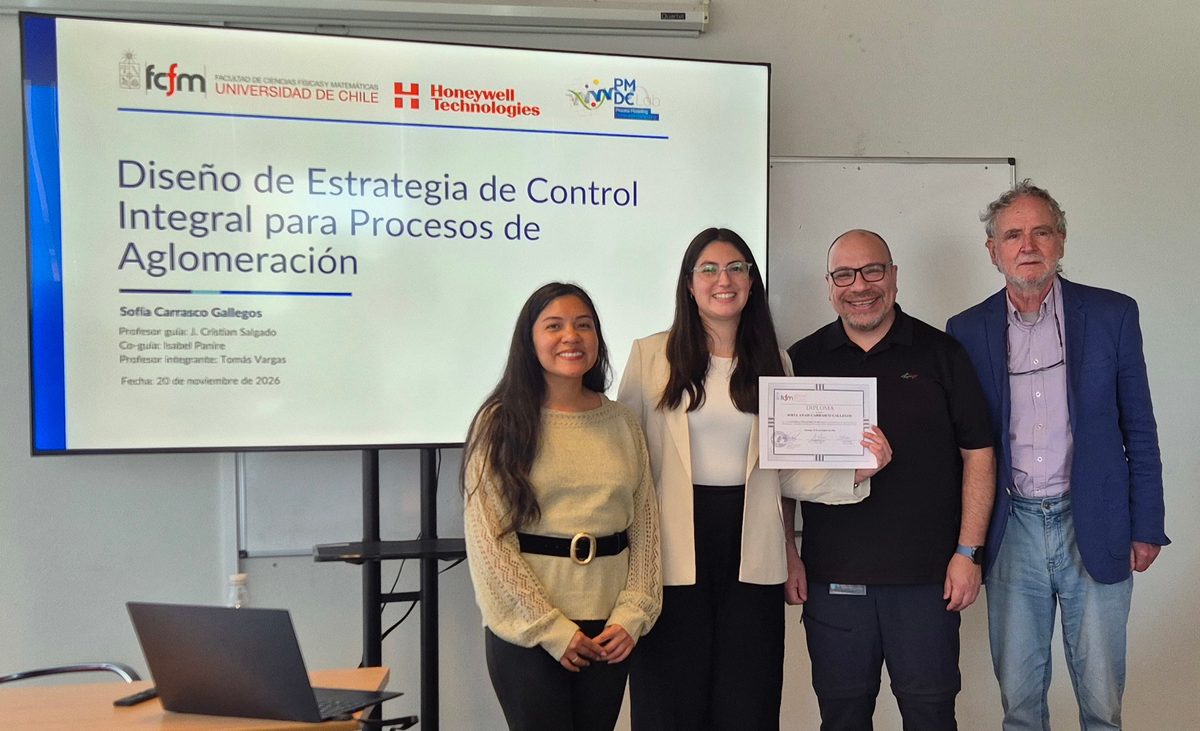
PMDC Lab student Sofia Carrasco graduates as a Chemical Civil Engineer *summa cum laude*

On Friday, November 20, 2026, Sofía Carrasco, a member of the PMDC Lab, successfully defended her thesis for the degree of Chemical Civil Engineer, achieving the highest possible grade (7.0) and highest distinction (distinción máxima). Her thesis, titled "Design of a Comprehensive Control Strategy for Agglomeration Processes," was developed in collaboration with Honeywell Chile. This work reflects the ability of our lab's students to tackle and solve highly complex industrial challenges using advanced engineering tools. Congratulations to Sofía on this great achievement!

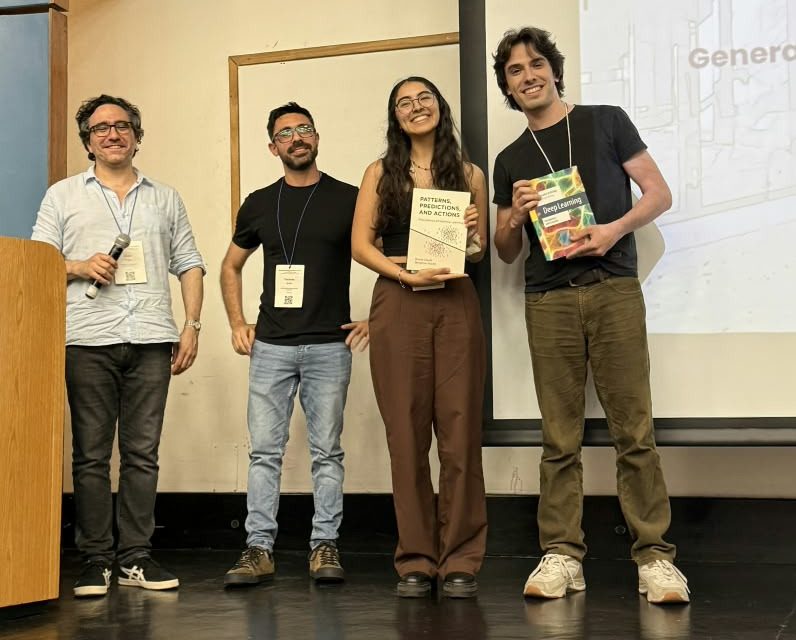
Ayelen Oyarzo wins second place for posters at the Deep Learning Spring School in Buenos Aires, Argentina.

Ayelen Oyarzo, a master's student at the PMDC Lab, won second place out of more than sixty posters at the Deep Learning Spring School, held in Buenos Aires, Argentina. Her poster, “Can RNNs predict how the nervous system generates locomotor rhythm?”, presents results from her master's thesis, advised by Prof. J. Cristian Salgado and Prof. Andrea Colins Rodríguez.

Read more →

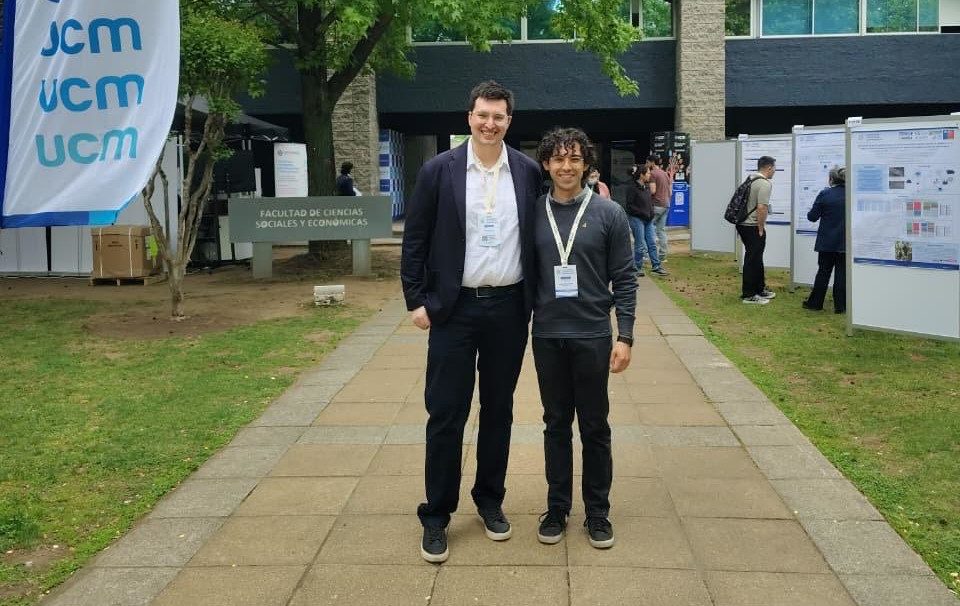
PMDC Lab students take part in the 1st Chilean Bioprocesses Congress

Roberto Aliaga and Darko Yurac presented posters on their master’s theses at the 1st Chilean Bioprocesses Congress, held from October 26 to 30 at the Catholic University of the Maule in Talca. They also took the opportunity to attend talks and network with other specialists in the field. Their participation reflects the PMDC Lab’s commitment to sharing research and fostering collaboration within the bioprocesses community.

Read more →